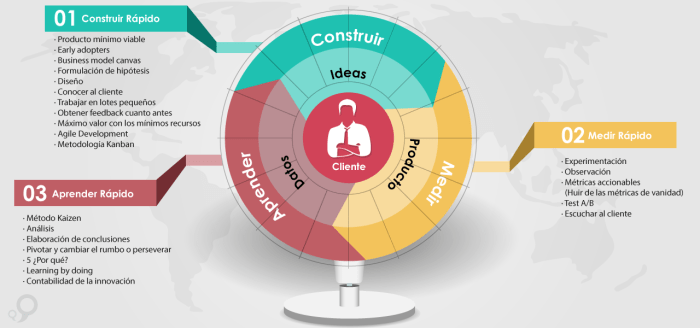
Lean Startup is revolutionizing how businesses approach innovation and growth. It emphasizes a systematic, scientific approach to creating and managing successful startups in an uncertain environment. By focusing on customer feedback and rapid prototyping, companies can quickly adapt to market needs and avoid wasting resources.
This methodology leverages the ‘Build-Measure-Learn’ feedback loop, allowing entrepreneurs to test their ideas efficiently and pivot when necessary. It’s applicable across various sectors, from technology to traditional industries, enhancing efficiency and fostering a culture of continuous improvement.
Lean Startup Fundamentals
The Lean Startup methodology revolutionizes how startups and established companies develop products and services. By emphasizing a scientific approach to creating and managing successful startups, it encourages businesses to learn what customers really want, rather than what they think they want. This approach minimizes risks and maximizes learning, leading to more sustainable success.One of the core principles of the Lean Startup methodology is the emphasis on validated learning.
This approach focuses on determining the right product for the target market through iterative cycles of testing and feedback. Central to this methodology is the ‘Build-Measure-Learn’ feedback loop, which allows entrepreneurs to continuously innovate and adjust their offerings based on real customer interactions. By adopting this method, companies can conserve resources and focus on refining their products to meet customers’ needs effectively.
Significance of Build-Measure-Learn Feedback Loop
The ‘Build-Measure-Learn’ feedback loop is the heart of the Lean Startup approach. It establishes a systematic process for developing products and gathering customer feedback.
1. Build
Start with a Minimum Viable Product (MVP) to test assumptions. This version includes only the essential features necessary to invite user feedback.
2. Measure
Collect data from real users interacting with the MVP. This can include usage statistics, customer satisfaction surveys, and direct feedback.
3. Learn
Analyze the data to understand what works and what doesn’t. This knowledge informs future iterations of the product, helping to refine features or pivot entirely if necessary.Through this process, entrepreneurs can make informed decisions based on actual user experiences, leading to products that resonate more strongly with their target audience.
Minimizing Waste in Business Development
The Lean Startup methodology significantly reduces waste in the business development process by prioritizing efficiency and customer-centric practices. Waste can manifest in various forms, including unnecessary product features, extensive marketing campaigns, or even prolonged development cycles that don’t lead to valuable outcomes.By focusing on creating an MVP, startups avoid the pitfalls of developing fully-featured products that may not meet market needs.
This approach not only conserves financial resources but also saves time, allowing teams to pivot quickly when necessary. The Lean Startup model encourages continuous testing and learning, which helps identify the most valuable product features early in development.Furthermore, by implementing metrics that focus on actionable outcomes, such as customer acquisition cost and lifetime value, businesses can better gauge their performance and make data-driven adjustments.
“The goal is to learn what customers really want and not what you think they should want.”
Overall, the Lean Startup methodology fosters an environment of innovation while minimizing waste, ultimately leading to more successful and sustainable business practices.
Applications in Various Industries
Lean Startup principles have found a foothold across diverse industries, streamlining processes and enhancing innovation. The adaptability of these practices allows organizations to develop products and services that truly resonate with their target markets, irrespective of the sector. By focusing on rapid iteration, validated learning, and customer feedback, businesses can minimize waste and maximize their impact.
Employment and Work Sectors
In the employment and work sector, Lean Startup methodologies are being leveraged to create more efficient hiring processes and employee engagement strategies. Companies are utilizing rapid experimentation to refine their recruitment techniques, ensuring they attract the right talent. This involves continuously testing job descriptions, application procedures, and assessment tools based on feedback from applicants.An important aspect of these practices is the use of Minimum Viable Products (MVPs) in human resource technologies.
By developing basic versions of platforms for applicant tracking or employee feedback, companies can assess their effectiveness with users. This allows employers to gather insights quickly and adjust their systems accordingly. For instance, platforms like LinkedIn have employed Lean principles by regularly updating their user interface based on user feedback, enhancing usability and engagement.
Impact in the Industrial Goods and Services Landscape
In the industrial goods and services sector, Lean Startup methodologies have significantly transformed production and service delivery models. Organizations are increasingly adopting these principles to streamline operations and reduce overhead costs. By focusing on customer needs and rapid feedback loops, companies can efficiently develop products that meet market demands while minimizing waste.One prominent approach is the use of rapid prototyping in manufacturing.
This involves creating early models of new products to gather real-time user feedback before full-scale production. For example, General Electric has utilized Lean principles in their manufacturing processes, resulting in reduced cycle times and improved product quality. The company’s commitment to iterative design has allowed it to rapidly innovate, staying ahead of industry trends.
Examples in the Telecommunications Sector
The telecommunications sector has also benefited immensely from adopting Lean Startup strategies. Companies in this industry are employing these methods to enhance customer experiences and optimize service offerings. By focusing on customer feedback, telecom providers can quickly adapt their services and products to meet user expectations.For instance, T-Mobile has embraced Lean Startup practices by continuously testing new pricing models and service plans through pilot programs.
This approach allows them to gauge customer reactions and adjust their offerings before a full rollout. Additionally, by using customer data analytics, telecom firms can identify trends and pain points, enabling them to innovate more effectively.Moreover, the concept of MVPs is evident in the development of new apps and services. Telecom companies are launching beta versions of applications to gather user feedback before the official release, ensuring that the product meets market needs.
This iterative process significantly reduces the risk associated with new launches, providing a safety net for companies venturing into new service territories.
Lean Startup in Business Creation and Development
The Lean Startup methodology revolutionizes the way new ventures are conceived, developed, and launched. By minimizing waste and focusing on customer feedback, it enables entrepreneurs to build a sustainable business model in a fast-paced environment. This approach emphasizes the importance of iterative testing and learning, which can dramatically increase a startup’s chances of success.
Step-by-Step Guide for Implementing Lean Startup in New Ventures
Implementing Lean Startup principles requires a structured approach that allows entrepreneurs to validate their ideas through real market feedback. Here’s a step-by-step guide:
1. Define Your Value Proposition
Start by identifying the problem your product or service solves for your target customers. This will guide your development efforts.
2. Create a Minimum Viable Product (MVP)
Develop a simplified version of your product that includes just enough features to attract early adopters.
3. Test with Real Customers
Launch your MVP to a small segment of your target market. Gather feedback and observe how they interact with your product.
4. Measure Performance
Utilize metrics to evaluate the success of your MVP. This includes analyzing customer engagement data, sales figures, and feedback.
5. Learn and Iterate
Based on the feedback and data collected, make necessary adjustments to your product. This may involve pivoting your business model or enhancing features.
6. Scale
Once you have validated your product-market fit, start scaling your operations based on the insights gained from customer interactions.
Role of Customer Feedback in Product Development Using Lean Startup
Customer feedback plays a pivotal role in shaping the product development process within the Lean Startup framework. By actively engaging with customers, startups can better understand their needs, preferences, and pain points. This iterative loop of feedback and development fosters innovation and ensures that the final product resonates with users. The process can be broken down into key elements:
Feedback Collection
Use surveys, interviews, and usability tests to gather insights directly from customers.
Data Analysis
Analyze the data for trends and patterns to identify what aspects of the product are working and what require changes.
Rapid Prototyping
Quickly implement changes based on feedback to test new features or concepts without significant investment.
Continuous Improvement
Maintain an ongoing dialogue with customers to refine the product continuously. This leads to better user satisfaction and loyalty.
“Customer feedback is essential for validating assumptions and minimizing risk in product development.”
Comparison of Traditional Business Models with Lean Startup Approaches in the Publishing and Printing Industry
The Lean Startup methodology presents a stark contrast to traditional business models in the publishing and printing industry, specifically in how products are developed and brought to market. Traditional models often rely on extensive market research and long development cycles, which can lead to significant waste if a product fails to meet market needs.In contrast, Lean Startup approaches prioritize rapid experimentation and customer engagement.
Here are a few key differences:
Market Research vs. Customer Engagement
Traditional models invest heavily in market analysis before product development, while Lean Startup emphasizes direct customer interaction throughout the process.
Long Development Cycles vs. MVPs
Traditional publishing often requires full book development before release. Lean Startups focus on launching an MVP, such as an e-book or a limited print run, to gather early feedback.
Marketing Strategies
Traditional methods may depend on large-scale advertising campaigns, whereas Lean approaches leverage social media and community engagement to create buzz around new releases.
Feedback Loop
Traditional methods may see feedback as a post-launch activity, while Lean Startups view it as a continuous and integral part of the development cycle.These differences highlight how Lean Startup practices can lead to more adaptive and responsive business strategies in a rapidly changing market environment, allowing publishing and printing ventures to thrive even amid uncertainty.
Final Thoughts
In conclusion, embracing the Lean Startup methodology can transform how businesses operate, making them more responsive and innovative. By minimizing waste and prioritizing customer feedback, companies not only increase their chances of success but also contribute to a sustainable business model that thrives in today’s fast-paced market.
Popular Questions
What is Lean Startup methodology?
Lean Startup is a methodology that encourages rapid iteration and customer feedback to develop products and services more efficiently.
How does the Build-Measure-Learn cycle work?
This cycle involves building a minimum viable product (MVP), measuring its performance through customer feedback, and learning from the results to improve the product.
Can Lean Startup be applied to established businesses?
Absolutely! Established companies can adopt Lean Startup principles to innovate and stay competitive by experimenting with new ideas and adapting based on market responses.
What are some common mistakes in Lean Startup implementation?
Common mistakes include not defining clear metrics for measuring success and ignoring customer feedback, which can lead to misalignment with market needs.
Is Lean Startup only for tech startups?
No, Lean Startup principles can be applied across various industries, including healthcare, education, and manufacturing, to enhance efficiency and innovation.


