
With Entrepreneurial Mindset at the forefront, let’s dive into a world where creativity meets strategy, and ambition fuels innovation. This exploration unveils how cultivating an entrepreneurial spirit can transform not just businesses, but entire industries, offering a fresh perspective on challenges and opportunities alike.
Understanding the entrepreneurial mindset is crucial for anyone looking to break barriers in their respective fields. This mindset is characterized by traits such as resilience, adaptability, and a proactive approach to problem-solving. By examining its impact across various sectors—from employment to industrial goods—we can appreciate its significance in driving success and fostering innovative thinking.
Understanding the Entrepreneurial Mindset
Developing an entrepreneurial mindset is essential for anyone looking to succeed in business. This mindset includes a unique set of characteristics and attitudes that drive individuals to create, innovate, and overcome challenges. Entrepreneurs often view obstacles as opportunities for growth, which sets them apart in various industries.The entrepreneurial mindset is characterized by several key traits. These traits include creativity, risk-taking, and a strong internal locus of control.
Entrepreneurs are often characterized by their willingness to embrace uncertainty and pursue new ideas. This mindset significantly influences success across different sectors, as it fosters innovation and drives individuals to push boundaries.
Characteristics of an Entrepreneurial Mindset
An entrepreneurial mindset encompasses various traits that contribute to an individual’s ability to navigate the complexities of business. Understanding these characteristics is crucial for aspiring entrepreneurs to cultivate their skills effectively.
- Creativity: Entrepreneurs often think outside the box, coming up with innovative solutions to problems. This creativity allows them to develop unique products or services that stand out in the market.
- Risk-taking: A willingness to take calculated risks is integral to entrepreneurship. This trait enables entrepreneurs to seize opportunities that others may shy away from.
- Resilience: The ability to bounce back from failures is crucial. Entrepreneurs face numerous setbacks, but their resilience helps them stay committed to their goals.
- Vision: Successful entrepreneurs can envision the future and set clear goals. This vision aligns their actions with long-term objectives.
- Adaptability: The business landscape is always changing. Entrepreneurs must be flexible and open to pivoting their strategies as necessary.
Impact of an Entrepreneurial Mindset on Success Across Industries
The effects of cultivating an entrepreneurial mindset are evident in various industries, leading to enhanced performance and growth. This mindset fosters a proactive approach to challenges and opportunities, resulting in successful outcomes.
- Tech Industry: In the tech sector, entrepreneurs who embrace innovation often lead the way in developing groundbreaking technologies. Companies like Apple and Google thrive due to their founders’ entrepreneurial spirit and innovative thinking.
- Retail Sector: Businesses that adopt a customer-centric approach and innovate their offerings tend to outperform competitors. For instance, Amazon revolutionized retail by integrating technology and a strong entrepreneurial mindset.
- Healthcare: In healthcare, entrepreneurs are addressing gaps in service delivery through innovative solutions, such as telemedicine and personalized medicine. Their adaptability and resilience play significant roles in navigating regulatory challenges.
- Entertainment: The entertainment industry often relies on creative entrepreneurs who can anticipate trends and deliver fresh content, making companies like Netflix successful through their innovative strategies.
The Role of Resilience and Adaptability in Entrepreneurship
Resilience and adaptability are two fundamental elements of the entrepreneurial mindset, crucial for overcoming challenges and thriving in a competitive environment. Entrepreneurs must cultivate these traits to navigate the uncertainties of business successfully.
Resilience enables entrepreneurs to recover from setbacks, while adaptability allows them to pivot in response to changing market conditions.
- Resilience: Entrepreneurs face failures and obstacles that could derail their plans. Resilience helps them maintain focus and continue pursuing their objectives despite these challenges.
- Adaptability: The ability to adjust strategies based on market feedback or changing circumstances is vital. Entrepreneurs who can quickly pivot in response to new information are more likely to succeed.
Application of Entrepreneurial Mindset in Different Sectors
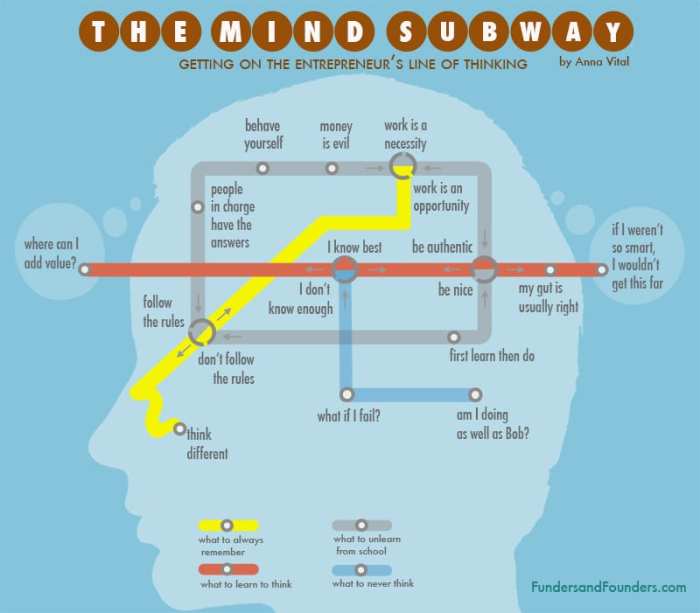
The entrepreneurial mindset is not just reserved for starting new businesses; it is a versatile approach that can be applied across various sectors. This mindset fosters innovation, resilience, and problem-solving skills, which are crucial for success in any field. By examining its application in employment and work, industrial goods and services, as well as management and publishing, we can uncover how these principles drive growth and adaptability in diverse environments.
Application of Entrepreneurial Mindset in Employment and Work
In the realm of employment and work, the entrepreneurial mindset empowers individuals to take ownership of their roles and pursue continuous improvement. Employees who adopt this mindset often seek innovative solutions to workplace challenges, enhancing productivity and job satisfaction. For instance, consider a marketing professional who experiments with new digital marketing strategies rather than sticking to traditional methods. By embracing a trial-and-error approach, they can identify more effective ways to engage customers and increase conversion rates.Another example can be found in project management, where team members proactively identify potential risks and opportunities, leading to better project outcomes.
These employees think like entrepreneurs by assessing market trends and customer needs, which allows for more agile decision-making. The key takeaway is that fostering an entrepreneurial mindset within teams can lead to a more dynamic and responsive work environment.
Key Entrepreneurial Strategies in Industrial Goods and Services
In the industrial goods and services sector, the entrepreneurial mindset manifests through strategic innovation and efficiency optimization. Companies in this field often leverage entrepreneurial strategies to improve product design, streamline operations, and enhance customer service. A prime example is a manufacturing firm that adopts lean production techniques to minimize waste and maximize output. By applying principles of continuous improvement, the company not only increases its profitability but also boosts employee morale by involving them in the innovation process.Here are some key strategies utilized in this sector:
- Adoption of Technology: Implementing advanced technologies like IoT and AI to automate processes and gather valuable data insights.
- Customer-Centric Design: Involving customers in the product development process to create offerings that precisely meet their needs.
- Sustainability Initiatives: Developing eco-friendly products and processes to address environmental concerns while attracting a conscientious consumer base.
- Collaborative Partnerships: Forming alliances with startups and tech companies to foster innovation and stay ahead of market trends.
These strategies reflect the entrepreneurial mindset, emphasizing adaptability and forward-thinking.
Significance of Entrepreneurial Mindset in Management and Publishing
Management and publishing industries greatly benefit from an entrepreneurial mindset as it encourages leaders to foster an innovative culture. In management, leaders who think like entrepreneurs set the vision and inspire teams to pursue ambitious goals. They create environments that encourage creativity and risk-taking, essential for navigating the fast-paced nature of modern business.In publishing, this mindset allows for the exploration of new formats and distribution channels, such as digital media, self-publishing, and subscription models.
The rise of platforms like Kindle Direct Publishing exemplifies how entities embrace entrepreneurial thinking to disrupt traditional publishing models. Key aspects of the entrepreneurial mindset in management and publishing include:
- Agility: Quick adaptation to changes in consumer preferences and technological advancements.
- Innovation: Continuous investment in new ideas and formats to engage audiences.
- Networking: Building relationships with influencers and other stakeholders to expand reach and impact.
- Data-Driven Decisions: Utilizing analytics to inform strategies and improve content relevance.
These practices not only enhance operational efficiency but also contribute to long-term sustainability and growth in these sectors.
Developing an Entrepreneurial Mindset
Cultivating an entrepreneurial mindset is essential for individuals aiming to thrive in today’s dynamic business landscape. This mindset encourages innovative thinking, resilience, and adaptability, crucial traits for navigating challenges and seizing opportunities.A structured plan for developing an entrepreneurial mindset should consider various strategies and practices that promote creative thinking and risk-taking. Implementing this plan involves a combination of education, experiential learning, and self-assessment.
Plan for Cultivating an Entrepreneurial Mindset
To effectively cultivate an entrepreneurial mindset, individuals can follow a well-rounded plan that includes the following components:
- Education and Training: Offer workshops and training sessions focusing on critical thinking, market analysis, and business planning to equip individuals with necessary knowledge and skills.
- Mentorship Programs: Connect aspiring entrepreneurs with experienced mentors who can provide guidance, support, and real-world insights.
- Networking Opportunities: Facilitate networking events where individuals can meet industry professionals and other entrepreneurs to exchange ideas and foster collaboration.
- Hands-on Experience: Encourage participation in internships or startup projects that allow individuals to apply their learning in real-world scenarios.
- Self-Reflection: Promote journaling and self-assessment exercises to help individuals explore their motivations, strengths, and weaknesses in an entrepreneurial context.
Resources and Tools for Encouraging Entrepreneurial Thinking in Telecommunications
The telecommunications industry is a rapidly evolving field, and fostering an entrepreneurial mindset is critical for innovation and competition. Providing the right resources and tools can facilitate this process.Incorporating various elements can enhance entrepreneurial thinking in the telecommunications sector:
- Innovation Labs: Establish dedicated spaces where teams can brainstorm, prototype, and test new ideas without the constraints of traditional corporate structures.
- Access to Data and Analytics Tools: Equip individuals with data-driven insights and analytics tools to help them identify market trends and consumer needs, enabling informed decision-making.
- Collaborative Platforms: Utilize digital platforms that encourage cross-functional collaboration within teams, allowing diverse perspectives to contribute to innovative solutions.
- Workshops on Emerging Technologies: Offer regular training sessions on the latest telecommunications technologies, such as 5G, IoT, and AI, to spark innovative thinking and application.
Fostering Innovation within the Textiles and Nonwovens Industry
The textiles and nonwovens industry presents unique challenges and opportunities for innovation. Fostering an entrepreneurial mindset in this sector can lead to sustainable practices and new product development.Several methods can be employed to encourage innovation within this industry:
- Research and Development Initiatives: Invest in R&D to explore new materials and processes that can enhance product performance and sustainability.
- Collaboration with Educational Institutions: Partner with universities and research centers to leverage academic expertise and stay abreast of emerging trends and technologies.
- Customer-Centric Approaches: Engage with customers to gather feedback and insights that can inform product development and innovation strategies.
- Eco-Friendly Practices: Promote sustainable practices within the production process, encouraging innovation that aligns with environmental responsibility.
- Incentivizing Idea Generation: Create programs to reward employees for innovative ideas that improve processes or product offerings, fostering a culture of creativity.
Last Word
In summary, embracing the entrepreneurial mindset is more than just a strategy; it’s a way of thinking that encourages growth, creativity, and resilience. As we’ve seen through various applications across industries, this mindset not only equips individuals for success but also propels entire sectors forward. So, whether you’re an aspiring entrepreneur or simply looking to enhance your professional approach, developing an entrepreneurial mindset could be your key to unlocking new opportunities.
Top FAQs
What are the key traits of an entrepreneurial mindset?
Key traits include resilience, adaptability, creativity, and a willingness to take risks.
How can I develop an entrepreneurial mindset?
Start by setting clear goals, embracing challenges, seeking feedback, and learning continuously.
Is an entrepreneurial mindset only for business owners?
No, it can benefit anyone in any profession by enhancing problem-solving skills and innovation.
How does an entrepreneurial mindset affect teamwork?
It encourages collaboration, creative thinking, and a proactive approach to overcoming challenges.
Can I train my team to develop an entrepreneurial mindset?
Yes, through workshops, mentoring, and fostering an open culture that values innovation and experimentation.


