
Inventory Management is more than just keeping track of stock; it’s a vital component that can make or break a business. Understanding the ins and outs of inventory systems helps streamline operations, reduce costs, and improve customer satisfaction. Whether you’re in textiles, telecommunications, or publishing, mastering inventory management is key to staying ahead in a competitive market.
This overview will explore the basics of inventory management, delve into effective techniques like just-in-time systems, and highlight the unique challenges faced by different industries. By grasping these concepts, businesses can enhance their efficiency and adapt to the ever-changing demands of the marketplace.
Inventory Management Basics
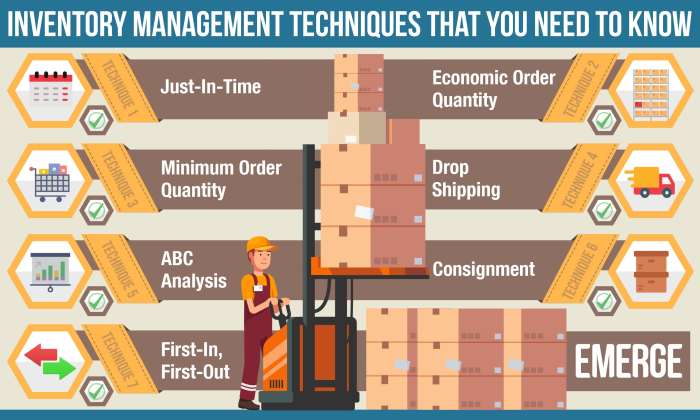
Inventory management is the process of overseeing and controlling the flow of goods in a business, ensuring that the right amount of inventory is available at the right time. This involves tracking stock levels, managing orders, and optimizing supply chain efficiency to meet customer demand without overstocking or understocking. A solid inventory management system is crucial for minimizing costs and maximizing profitability across various industries.Key components of inventory management systems include inventory tracking, order management, forecasting, and reporting.
Efficient inventory tracking involves using technology such as barcode scanners or RFID systems to monitor stock levels in real-time. Order management focuses on managing purchase orders and supplier relationships to ensure timely replenishment of stock. Forecasting analyzes historical sales data to predict future demand, while reporting provides insights into inventory performance and helps in making data-driven decisions.
Importance of Efficient Inventory Control
Efficient inventory control plays a critical role in various industries, affecting everything from cash flow to customer satisfaction. It is essential for maintaining optimal stock levels, thus preventing excess inventory which ties up capital and leads to increased storage costs. In sectors like retail, manufacturing, and e-commerce, effective inventory management can lead to improved sales performance and reduced operational costs.In retail, for example, having the right products available at the right time can significantly boost customer satisfaction and sales.
On the manufacturing side, managing raw materials and components efficiently can reduce production delays, ensuring that products are completed on time. Here are some points highlighting the significance of efficient inventory control:
- Reduces costs associated with excess inventory and storage.
- Improves customer satisfaction by ensuring product availability.
- Enhances operational efficiency by streamlining supply chains.
- Minimizes instances of stockouts that can lead to lost sales.
- Facilitates better demand forecasting, leading to informed purchasing decisions.
Best Practices for Tracking Inventory Levels
Adopting best practices for tracking inventory levels helps businesses maintain accuracy and efficiency in their inventory management processes. Effective tracking can prevent overstocking and stockouts, which can disrupt operations and affect profitability. The following practices can enhance inventory tracking:
1. Implementing an inventory management software
Using technology helps automate tracking processes and provides real-time data on stock levels.
2. Regular stock audits
Conducting periodic physical counts ensures that the recorded stock aligns with what is actually on hand.
3. Utilizing barcoding or RFID systems
These technologies streamline the check-in and check-out processes, reducing human error and speeding up inventory tracking.
4. Establishing reorder points
Setting minimum stock levels triggers reordering processes to maintain adequate inventory levels.
5. Training staff
Empowering employees with the knowledge and tools to track inventory effectively contributes to overall operational efficiency.By applying these best practices, businesses can enhance their inventory management capabilities, leading to improved financial performance and customer satisfaction.
Inventory Management Techniques
Effective inventory management techniques are vital for maintaining a smooth operational flow and ensuring that businesses do not overstock or understock their products. This segment will delve into significant inventory management strategies, highlighting key differences between traditional and just-in-time (JIT) systems, comparing popular inventory management software, and illustrating the role of inventory forecasting in business planning.
Differences Between Just-in-Time (JIT) and Traditional Inventory Systems
Just-in-time (JIT) inventory and traditional inventory systems serve the same overarching goal of managing stock levels but do so in distinctly different manners. Traditional inventory management often relies on holding large amounts of stock as a buffer against fluctuations in demand. This approach can lead to increased holding costs, including storage, insurance, and potential obsolescence.In contrast, JIT inventory aims to minimize stock levels by ordering goods only as they are needed for production or sales.
This minimizes holding costs and reduces waste but requires precise forecasting and reliable suppliers. Companies practicing JIT often implement stronger relationships with vendors to ensure timely deliveries, which can lead to a more streamlined and efficient production process.
JIT inventory is all about efficiency and reducing waste while traditional systems focus on safety stock and availability.
Comparison of Inventory Management Software
Selecting the right inventory management software is crucial for optimizing stock control processes. Below is a comparison table that Artikels key features, strengths, and target audiences of some of the leading inventory management software options available in the market.
| Software | Key Features | Strengths | Target Audience |
|---|---|---|---|
| TradeGecko | Multi-channel sales, order management, reporting | User-friendly interface, integrations with e-commerce platforms | Small to medium-sized businesses |
| Zoho Inventory | Inventory tracking, order fulfillment, shipping integration | Affordable pricing, customizable workflows | Startups and small enterprises |
| NetSuite | Real-time inventory tracking, demand planning, ERP integration | Comprehensive features for larger organizations | Medium to large enterprises |
| Fishbowl Inventory | Manufacturing, order management, barcode scanning | Strong manufacturing capabilities, flexible pricing | Manufacturers and wholesalers |
| Odoo | Full ERP system, inventory tracking, customizable modules | Open-source, highly adaptable | Businesses of all sizes |
Role of Inventory Forecasting Methods in Business Planning
Inventory forecasting is a key component of successful business planning, as it involves predicting future demand for products based on historical data, market trends, and consumer behavior. Accurate forecasting allows businesses to maintain optimal stock levels, reduce costs, and enhance customer satisfaction through timely product availability.Several methods of inventory forecasting exist, including qualitative methods such as expert judgment and quantitative methods like time series analysis and regression models.
For example, a retail business might analyze sales data from previous holiday seasons to forecast demand for upcoming promotions.
Effective inventory forecasting mitigates the risk of stockouts and overstock situations, enabling businesses to be proactive rather than reactive.
Incorporating robust forecasting methods into inventory management strategies can significantly enhance a company’s ability to adapt to changes in the market and consumer preferences, ultimately leading to improved operational efficiency and profitability.
Industry-Specific Inventory Management
Inventory management practices can significantly differ across various industries due to their unique operational needs, product lifecycles, and customer demands. Understanding these differences is crucial for developing effective strategies tailored to each industry. This section focuses on how inventory management varies in the textiles and nonwovens industries, the challenges faced in telecommunications, and strategies for optimizing inventory management in publishing and printing businesses.
Textiles and Nonwovens Industry Inventory Management
In the textiles and nonwovens industry, inventory management is essential due to the seasonal nature of fashion trends and the varying demand for raw materials and finished products. Companies must balance maintaining enough stock to meet customer demand while minimizing excess inventory that can lead to increased holding costs. Key inventory management considerations include:
- Seasonality: Fashion trends can change rapidly, requiring businesses to forecast demand accurately and adjust inventory levels accordingly.
- Material Sourcing: The need for diverse raw materials necessitates effective supplier relationships and efficient logistics to ensure timely availability.
- Production Cycles: Nonwovens may involve shorter production runs, demanding agile inventory systems that accommodate quick changes in production schedules.
“Effective inventory management in textiles requires balancing responsiveness to trends with cost control.”
Challenges in Telecommunications Inventory Management
Telecommunications is a dynamic industry characterized by rapid technological advancements and changing consumer preferences. Managing inventory in this field presents several challenges, primarily due to the complexity of products and the need for timely delivery.Some prominent challenges include:
- Obsolescence: With technology evolving quickly, inventory may become obsolete before it can be sold, necessitating accurate forecasting and agile inventory turnover strategies.
- Complex Supply Chains: Telecommunications products often involve multiple components and suppliers, making coordination and visibility critical for effective inventory management.
- Regulatory Compliance: Compliance with industry regulations can complicate inventory management, as companies must ensure that all components meet legal standards.
“Inventory management in telecommunications must prioritize agility to cope with rapid technological changes.”
Strategies for Inventory Management in Publishing and Printing
In the publishing and printing industries, inventory management is pivotal for balancing production costs with meeting customer demands. With products such as books, magazines, and printed materials, businesses must efficiently manage both raw materials and finished goods.Key strategies for improving inventory management include:
- Just-in-Time (JIT) Inventory: Implementing JIT systems can reduce storage costs and minimize waste by ensuring materials arrive precisely when needed for production.
- Digital Inventory Tracking: Utilizing technology for real-time tracking of inventory levels can enhance visibility and help in timely decision-making.
- Demand Forecasting: Employing robust forecasting tools can help predict future trends and adjust inventory accordingly to avoid overproduction or stockouts.
“Implementing advanced forecasting methods can significantly enhance inventory accuracy in publishing.”
Last Recap
In conclusion, effective Inventory Management is a crucial aspect of business success that requires attention to detail and strategic thinking. By implementing best practices, utilizing the right technologies, and understanding the specific needs of your industry, you can optimize your inventory processes and drive your business forward. Remember, a well-managed inventory not only boosts your bottom line but also enhances customer satisfaction and loyalty.
General Inquiries
What is inventory management?
Inventory management involves overseeing the flow of goods from manufacturers to warehouses and ultimately to the point of sale, ensuring that there’s the right amount of product available at the right time.
Why is inventory management important?
Effective inventory management helps businesses reduce costs, improve cash flow, and enhance customer satisfaction by ensuring product availability.
What are common inventory management techniques?
Common techniques include just-in-time (JIT), ABC analysis, and drop shipping, each offering different benefits depending on the business model.
How often should inventory be reviewed?
Inventory should be reviewed regularly, ideally at least monthly, to ensure accurate tracking and timely decision-making.
What software tools are available for inventory management?
There are many software tools available, such as TradeGecko, Fishbowl, and Zoho Inventory, each offering various features to streamline inventory processes.


