Private 5G Networks are transforming the landscape of telecommunications, offering tailored solutions that cater to specific business needs. This next-generation technology stands out by providing enhanced security, lower latency, and greater control over network resources.
As organizations across various sectors explore the potential of Private 5G, they discover its ability to optimize operations, stimulate innovation, and create new opportunities. From industrial applications to telecommunications, Private 5G Networks are becoming essential for businesses looking to stay competitive in a rapidly evolving digital environment.
Private 5G Networks Overview
Private 5G networks are dedicated telecommunications networks that utilize 5G technology, tailored specifically for individual organizations or enterprises. Unlike public 5G networks, which serve a wide range of users and applications, private networks are focused on meeting the unique needs of a single organization, enhancing control, security, and performance. As modern industries increasingly rely on digital transformation, the significance of private 5G networks has grown, allowing organizations to harness high-speed connectivity, low latency, and enhanced capacity for innovative applications.The advantages of implementing private 5G networks extend across various industries, driving efficiency and enabling new business models.
These networks provide higher security and privacy by keeping sensitive data within the organization’s control. They also support the deployment of advanced technologies such as IoT (Internet of Things), real-time analytics, and automation. Industries like manufacturing, healthcare, logistics, and education benefit immensely by leveraging the customizability of private 5G networks to optimize operations and improve service delivery.
Key Components of Private 5G Network Infrastructure
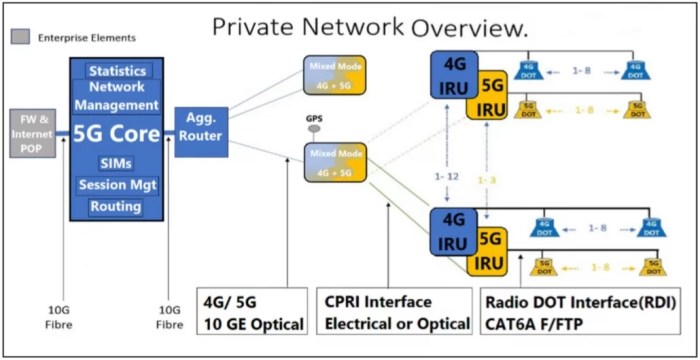
Establishing a robust private 5G network requires several essential components that work together to deliver the promised performance and reliability. Below are the critical elements that comprise a private 5G network infrastructure:
- Radio Access Network (RAN): This component consists of base stations and antennas that provide wireless coverage. RAN is crucial for connecting devices within the network and ensuring they communicate efficiently.
- Core Network: The core network handles data routing, management, and services. It is responsible for processing user data and supporting network functionalities such as security and service quality.
- Backhaul Network: This element connects the RAN to the core network, often through fiber-optic cables. A robust backhaul is essential for maintaining low latency and high-speed data transfer across the network.
- Network Management System (NMS): An NMS allows administrators to monitor, control, and optimize the network. It provides insights into performance metrics, security incidents, and user connectivity, enabling swift troubleshooting and decision-making.
- Edge Computing: Integrating edge computing capabilities allows data processing closer to the source, reducing latency and bandwidth use. This is particularly useful for real-time applications that require immediate responses.
Each of these components plays a vital role in ensuring that private 5G networks deliver the performance and reliability required for modern business applications. By understanding and integrating these elements, organizations can build tailored solutions that drive their digital transformation efforts effectively.
Applications in Various Industries

Private 5G networks are revolutionizing various sectors by enhancing operational efficiency, improving service delivery, and fostering innovation. By providing ultra-reliable low-latency communication and high-speed connectivity, these networks enable businesses to optimize their processes and create new solutions tailored to their needs. Here’s a closer look at how Private 5G networks are making an impact across different industries.
Operational Efficiency in Industrial Goods and Services
In the industrial sector, Private 5G networks are transforming how organizations operate, leading to increased efficiency and productivity. The ability to connect a multitude of devices seamlessly allows for real-time data exchange and analytics, which is crucial for decision-making. Here are some key enhancements driven by Private 5G in industrial goods and services:
- Automation of Production Lines: With ultra-low latency, machines can communicate and respond to commands in real-time, facilitating smoother operational flows and reducing downtime.
- Remote Monitoring and Maintenance: Companies can monitor equipment health from a distance, using predictive analytics to anticipate failures before they occur, thereby decreasing maintenance costs.
- Enhanced Safety Protocols: Private 5G enables the integration of advanced safety measures, such as real-time monitoring of hazardous environments, ensuring worker safety and compliance with regulations.
Use Cases in Telecommunications
Telecommunications companies are leveraging Private 5G networks to enhance service delivery and customer experience. These networks provide a foundation for the deployment of new services and applications that meet the evolving demands of consumers. Notable use cases include:
- Faster Data Speeds: Private 5G networks allow telecom providers to deliver higher data speeds, which improves customer satisfaction and retention.
- Network Slicing: This technique allows telecom operators to create multiple virtual networks on a single physical infrastructure, optimizing resources and providing tailored services to different customer segments.
- IoT Integration: Enhanced connectivity supports the seamless integration of Internet of Things (IoT) devices, enabling smarter homes and cities through improved connectivity and data exchange.
Innovations in the Textiles and Nonwovens Sector
Private 5G networks are also facilitating significant innovations in the textiles and nonwovens sector, allowing companies to streamline operations and introduce smart textiles. The following points illustrate the impact of Private 5G in this industry:
- Smart Manufacturing: Real-time data analytics facilitate the monitoring of production processes, allowing manufacturers to adjust parameters swiftly and maintain quality control.
- Supply Chain Optimization: Enhanced connectivity enables better tracking and management of materials throughout the supply chain, reducing waste and improving efficiency.
- Development of Smart Textiles: The integration of advanced technologies, including sensors and connectivity, leads to the creation of textiles that can monitor health or environmental conditions, revolutionizing applications in healthcare and sports.
Influence on Employment and Business Development
The deployment of Private 5G Networks is set to reshape the employment landscape and stimulate business growth across various sectors. As these networks become more prevalent, they create a plethora of job opportunities and foster innovation. With enhanced connectivity, businesses can leverage advanced technologies to enhance their operations, which in turn impacts the job market significantly.Private 5G Networks not only create jobs directly associated with their deployment but also catalyze the development of new business models that rely on ultra-reliable, low-latency connectivity.
Various sectors, including manufacturing, healthcare, and logistics, are likely to see transformative changes.
Job Creation Opportunities
The introduction of Private 5G Networks will lead to various job creation opportunities. Here are some key areas where employment is expected to grow:
- Network Infrastructure Roles: The installation and maintenance of Private 5G networks require skilled technicians, engineers, and project managers.
- Cybersecurity Experts: As networks become more complex, the demand for cybersecurity professionals to protect sensitive data will increase.
- Data Analysts: Businesses will need data analysts to interpret the vast amounts of data generated by connected devices, enabling them to make informed decisions.
- IoT Specialists: With the rise of IoT devices connected to Private 5G, specialists are required to manage and optimize these systems.
- Content Creators: New business models will require creative professionals to develop content tailored to enhanced consumer engagement.
Business Creation and Development
Private 5G Networks are instrumental in driving business creation and development across various industries. The high-speed and reliable connectivity they offer facilitate innovations that can lead to the emergence of new startups and business models. Some notable impacts include:
- Enhanced Operational Efficiency: Businesses can streamline operations and reduce costs through automation and real-time data analytics.
- New Service Offerings: Companies can develop new products and services that leverage the capabilities of Private 5G, such as remote monitoring and smart manufacturing solutions.
- Innovation Hubs: Regions adopting Private 5G are likely to attract tech startups and innovation hubs, boosting local economies.
- Cross-industry Collaboration: Private 5G fosters collaboration among different sectors, leading to the creation of hybrid business models that can capitalize on shared resources and expertise.
Impact on Domestic Services Versus Traditional Services
The influence of Private 5G Networks extends differently to domestic services compared to traditional services. This distinction can be highlighted through a comparative analysis:
The following table summarizes the impacts:
| Aspect | Domestic Services | Traditional Services |
|---|---|---|
| Efficiency | Significantly improved through automation and real-time data processing. | Gradual improvements; often reliant on legacy systems and procedures. |
| Consumer Experience | Enhanced through personalized services and on-demand access. | Standardized experiences with limited personalization. |
| Innovation | Fast-paced, with new services emerging rapidly due to low barriers of entry. | Slower, with established players dominating and innovation often hindered by legacy practices. |
| Job Roles | Emergence of new roles focusing on tech integration and customer engagement. | Traditional roles may diminish as automation takes precedent. |
“Private 5G is not just a technology upgrade; it’s a catalyst for job creation and innovative business models that redefine industry standards.”
Ending Remarks
In conclusion, the implementation of Private 5G Networks is not just a trend but a significant shift in how industries operate and grow. By enhancing connectivity and fostering innovation, these networks are poised to reshape employment landscapes and business development strategies, making them a vital consideration for future-focused enterprises.
FAQ Summary
What is a Private 5G Network?
A Private 5G Network is a dedicated mobile network that provides enhanced connectivity, security, and control for specific organizations or industries.
What are the benefits of using Private 5G Networks?
Benefits include improved speed, reduced latency, greater security, and the ability to handle a large number of devices seamlessly.
How does Private 5G impact industries?
It enhances operational efficiency, fosters innovation, and supports new business models across various sectors.
Can smaller businesses benefit from Private 5G Networks?
Yes, smaller businesses can leverage Private 5G to improve operational efficiency and reduce costs by customizing their network needs.
Is it expensive to implement a Private 5G Network?
The cost can vary based on infrastructure needs, but many businesses find the long-term benefits outweigh the initial investment.


